The short version
- 46 CFR 190.20-35(a) requires a hospital space on voyages over three days between ports with a crew of 12 or more.
- The subpart is titled for scientific personnel, and the trigger counts crew only. 10 crew plus 30 scientists means no requirement.
- 46 CFR part 196 Operations has no medical section at all. The full section list was read to confirm it.
- The space must be used for the care of the sick and for no other purpose.
- Single occupancy berthing removes the requirement, but only if one room is designated in writing.
The subpart is named for scientists and then counts only crew
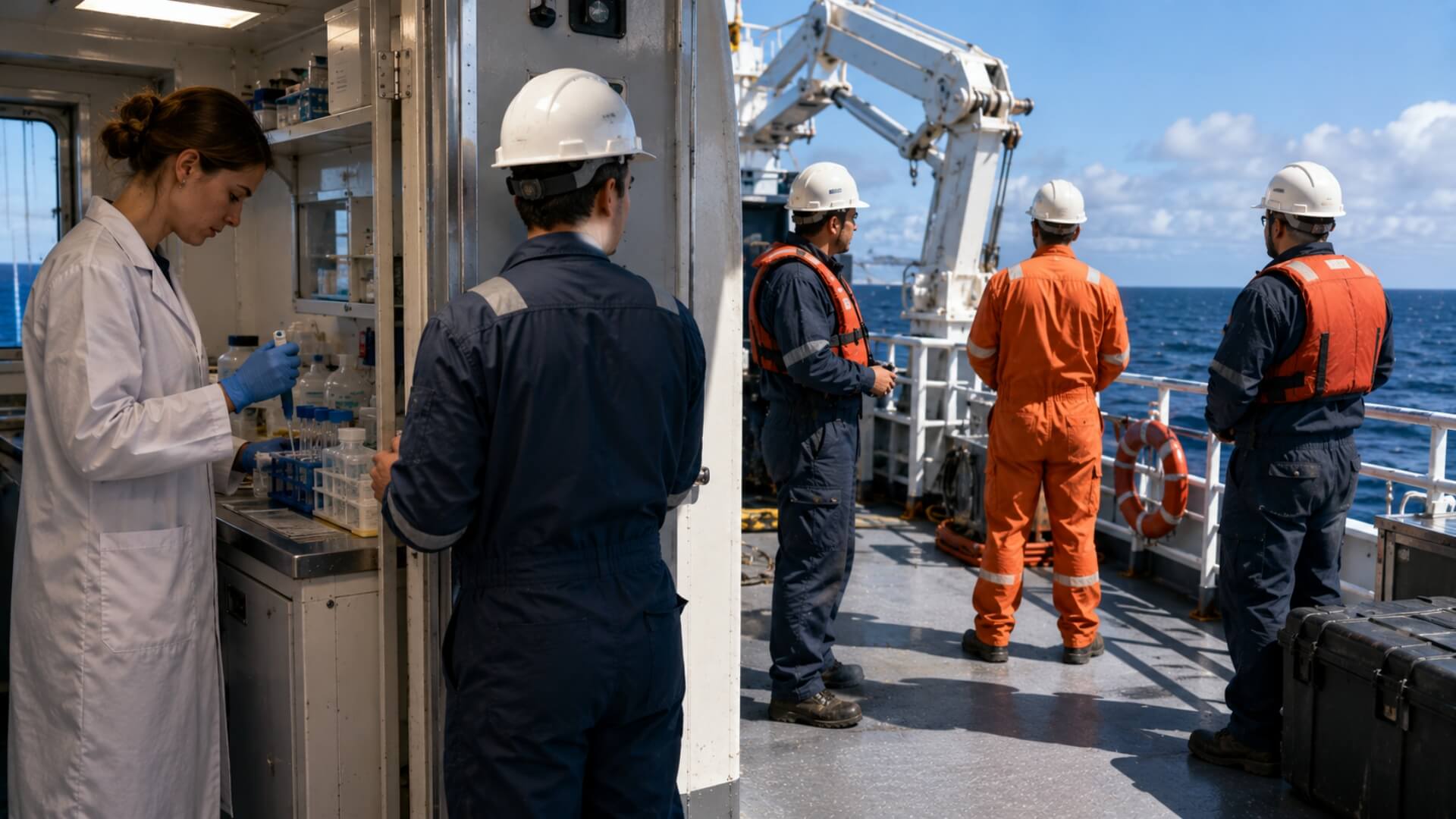
Subpart 190.20 of the oceanographic research vessel rules is titled Accommodations for Officers, Crew, and Scientific Personnel. Scientific personnel are in the heading. They are not in the trigger.
46 CFR 190.20-35(a) requires a hospital space on each vessel which in the ordinary course of its trade makes voyages of more than three days duration between ports and which carries a crew of 12 or more.[1]
The consequence, stated plainly
A research vessel sailing a fourteen day cruise with 10 crew and 30 scientists carries 40 people and no hospital space requirement. The trigger counts the 10.
That is not a drafting slip you can argue around. It is a word choice, and the same subchapter uses the broader term elsewhere in its own heading, which makes the narrower word in the trigger deliberate.
Operators running mixed complements meet the same counting problem in commercial fishingand on uninspected vessels, where the class boundary rather than the headcount decides the answer.
Three US hospital space rules, three different counting words
Put the three side by side and the pattern is unmistakable. Each was written for a different fleet, and each counts a different population.
| Rule | Fleet | Counts |
|---|---|---|
| 46 CFR 190.20-35 Subchapter U |
Oceanographic research vessels[1] | Crew of 12 or more, voyages over 3 days between ports[1] |
| 46 CFR 92.20-35 Subchapter I |
Cargo and miscellaneous vessels[2] | Crew of 12 or more[2] |
| 46 CFR 108.209 Subchapter I-A |
Mobile offshore drilling units[3] | Persons, 12 or more, voyage over 3 days[3] |
The MODU rule counts persons because a drilling unit carries a large industrial complement the marine crew does not include. A research vessel carries exactly that shape of complement and gets the crew wording anyway.
Our article on hospital space requirements works through 92.20-35 and 108.209 in full, including the berth formula. This one is about the population the research fleet rule leaves out. The MODU review covers the drilling side.
Nothing operator facing exists for this fleet
A live capture in September 2026 returned, for the medical requirements of a US research vessel: two govinfo PDF reprints of Subchapter U, one from the 2012 edition and one from 2025, the eCFR subchapter index, the accommodation subpart itself, and then unrelated chemical testing material from a completely different part of Title 46.
Not one page written for the person who has to run the programme. No contents guidance, no discussion of the scientific personnel gap, no comparison to the cargo or MODU rules.
This is the same shape recorded for uninspected vessels and commercial diving: the statute ranks, and nothing translates it. The Subchapter L reviewand the Subchapter M reviewfound the same emptiness in two more fleets.
Part 196 Operations has no medical section at all
Before asserting an absence, read the section list rather than the subpart list. The full list of Subpart 196 Operations was read for this article, all twenty three subject groups from 196.01 Application to 196.95 Pilot Boarding Operations.[4]
There is no medical section. No medicine chest, no first aid equipment, no medical training, no illness procedure. The operations rules for a fleet that routinely works days from definitive care contain nothing about medical care.
What the operations subpart does carry is adjacent and useful.
| Section | Subject | Why it matters medically |
|---|---|---|
| 196.07 | Notice and reporting of casualty and voyage records[5] | The reporting channel when a medical event becomes a casualty |
| 196.13 | Station bills[4] | Where a medical response role can be assigned by name |
| 196.15 | Tests, drills and inspections[6] | The only recurring exercise obligation. Medical is not named, so add it |
| 196.35 | Logbook entries[7] | The record that proves a decision was made and when |
Every one of those is a hook a programme can hang medical procedure on without inventing authority. Sanitation reaches the fleet from outside Title 46 entirely, through the FDA rules on potable water and medical care spaces, and the waste stream through three separate federal titles. That is the practical work our maritime medical consulting engagement does on this fleet.
Subchapter U, mapped for a medical programme
Seven parts, and only one sentence in the whole subchapter is medical. Laying it out is faster than searching it.
| Part | Subject | Medical content |
|---|---|---|
| 188 | General provisions[10] | Definitions and scope. None |
| 189 | Inspection and certification[9] | None |
| 190 | Construction and arrangement | 190.20-35 hospital space. The only medical provision in the subchapter[1] |
| 193, 194, 195 | Fire protection, explosives, vessel control[9] | None |
| 196 | Operations[4] | None. Full section list read to confirm |
Compare that with the fleets that at least have a starting point: commercial fishing under 46 CFR 28.210, small passenger vessels under Subchapter T and the kit comparison across every class.
What the hospital space itself has to be
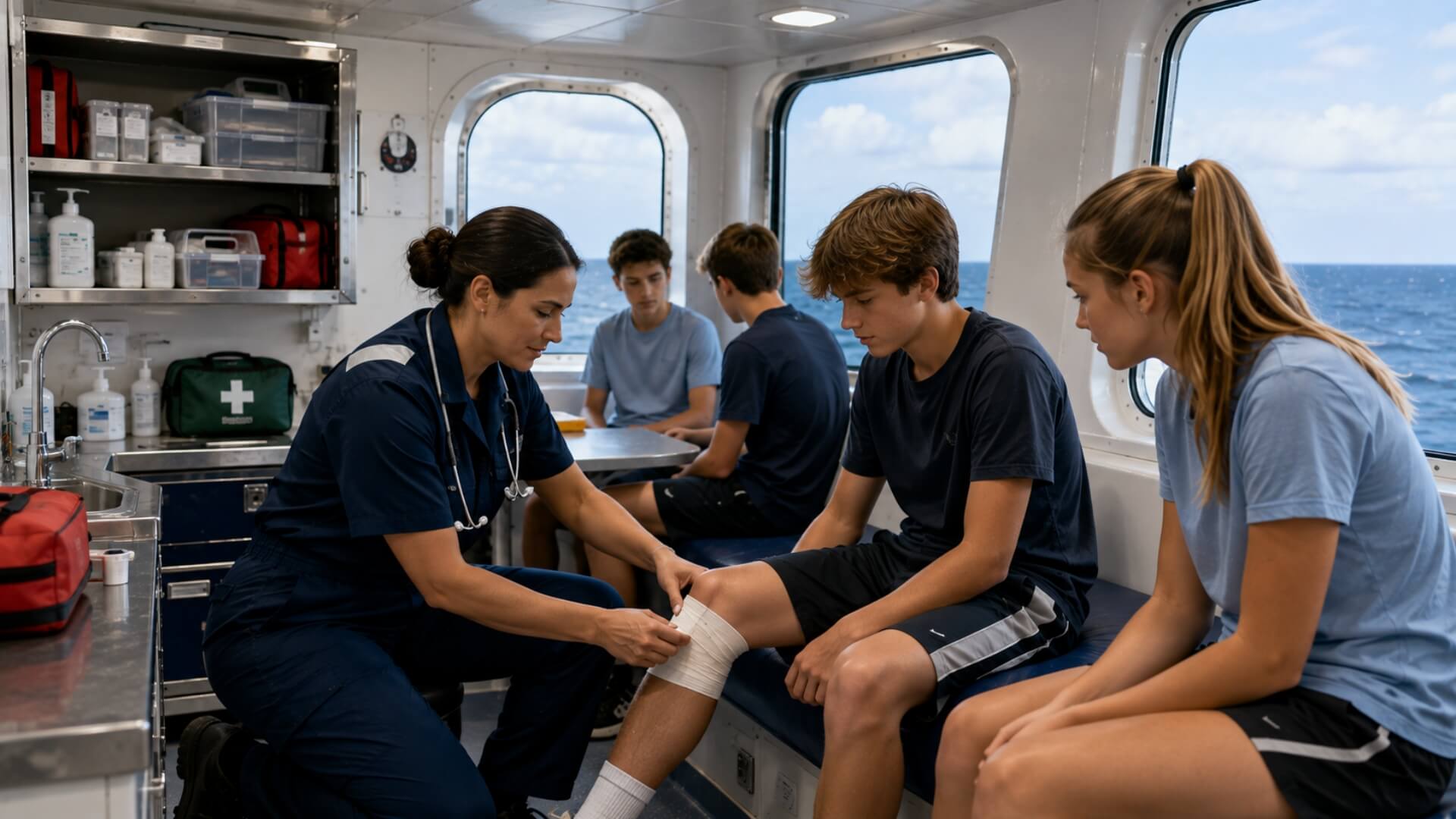
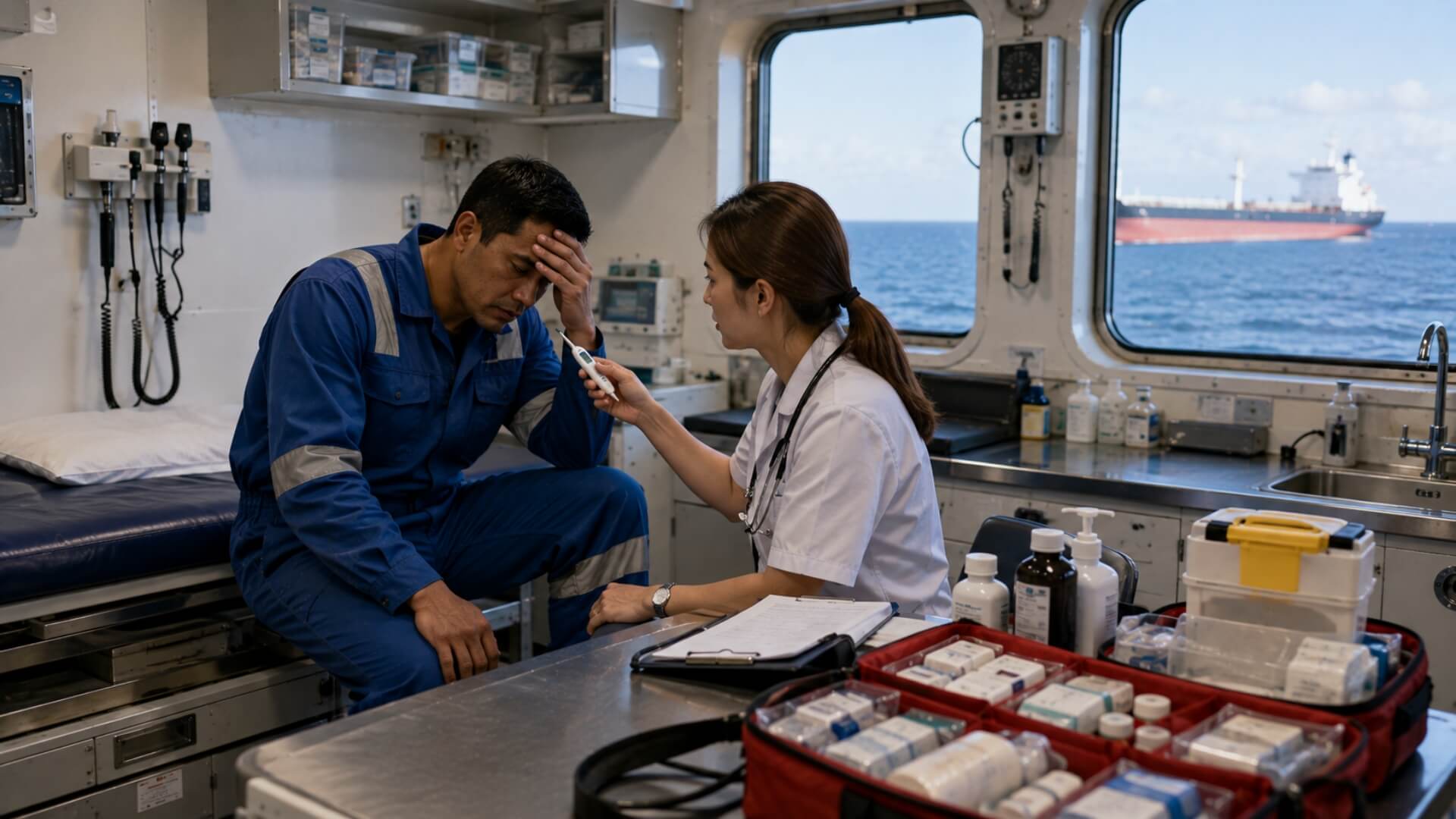
Where the trigger is met, the specification is short and strict. Paragraph (b) requires the hospital to be suitably separated from other spaces and used for the care of the sick and for no other purpose.[1]
No other purpose is the clause that fails inspections
A compartment doubling as a store, a dry lab, a spare cabin or a gear locker is not a hospital space, however well equipped. The exclusivity is the requirement.[1] On a vessel where every square metre is contested, this is the one that quietly slips.
Paragraph (f) provides the exception. Where the crew is berthed in single occupancy rooms, a hospital space is not required provided that one room must be designated and fitted for use as a treatment or isolation room.[1]
Read that as a documentation duty, not a construction one. The word is designated. Most modern research vessels berth singly and qualify, and almost none has made the written designation the exception requires. Sleeping accommodation rules sit at 190.20-20.[8]
Scientific personnel are not crew, and that reaches further than berths
Once the counting word matters for the hospital space, it is worth asking where else the distinction bites on a research cruise.
- Hospital space. Crew of 12 or more. Scientists excluded from the count.[1]
- The chest. No federal contents rule reaches this fleet at all, so the standard is whatever the operator writes. See how to stock a ship medicine chest.
- Controlled substances. 21 CFR 1301.25 turns on the vessel and the owner or operator, not on who is aboard. A scientist does not change the analysis. Read the 21 CFR 1301.25 walkthrough.
- Quarantine reporting. 42 CFR 71.21 covers any death or ill person among passengers or crew, so the status question returns at the US port call. See the CDC reporting article.
- Casualty reporting. Injury severity, not employment status, drives the threshold. See beyond first aid.
The honest summary is that a scientist aboard has the same clinical needs as a mate and a weaker position in the regulations. Closing that gap is a policy decision the operator makes, not one the CFR makes for them. The owner and DPA question decides who owns it.
Distance is the multiplier this fleet cannot avoid
A cargo vessel on a liner route is rarely more than a few days from a port with a hospital. A research vessel is frequently on station, deliberately, in the place furthest from one.
The regulation does not scale with that. The trigger is three days between ports and twelve crew, and it returns the same answer for a coastal survey and a mid ocean cruise.[1]
Planning medical capability by time to definitive care sets out the method that does scale, and it is the right frame for this fleet. The medevac decision is the sharp end of it, and on a research cruise the aircraft range question is often the binding one. If the cruise carries a dive spread, 46 CFR 197.314 adds a physician approved medical kiton top of everything above.
Six things to settle before the next cruise
- Count your crew, then count your persons. If the two differ, write down which number each obligation uses.[1]
- If you berth singly, make the written designation that 190.20-35(f) requires and file it.[1]
- Audit the designated space against “no other purpose.” Remove the stores.[1]
- Add a medical drill to the 196.15 cycle. Nothing names it, so nothing prompts it.[6]
- Write the medical role into the station bill under 196.13, by position.[4]
- Decide, in policy, whether scientists get the same standard as crew. The regulation will not decide it for you.
Discovery Health MD is led by Ann Jarris MD, MBA, FACEP, a board certified emergency physician. We build the chest through ship medical chest management, and the programme frame in the six decisions that come first. Speak to the team.
Common questions
Do research vessels need a hospital space?
Only on a crew count. 46 CFR 190.20-35(a) requires a hospital space on a vessel which in the ordinary course of its trade makes voyages of more than three days duration between ports and which carries a crew of 12 or more[1]. Scientific personnel are named in the subpart heading but not in the trigger, so a vessel with 10 crew and 30 scientists carries 40 people and no requirement. Our maritime medical consulting service maps which number each obligation uses.
Are scientific personnel counted as crew on a US research vessel?
Not for the hospital space trigger. 46 CFR subpart 190.20 is titled Accommodations for Officers, Crew, and Scientific Personnel, yet 190.20-35(a) counts crew of 12 or more[1]. Compare 46 CFR 108.209, which counts persons on a mobile offshore drilling unit precisely because of the industrial complement[3], and 46 CFR 92.20-35, which counts crew[2]. Three rules, three counting words. Read our hospital space article for the full comparison.
Does 46 CFR Subchapter U require a medicine chest?
No. The full section list of Subpart 196 Operations was read for this article, all subject groups from 196.01 to 196.95, and it contains no medical section: no medicine chest, no first aid equipment, no medical training and no illness procedure[4]. The only medical provision anywhere in the subchapter is the hospital space at 190.20-35[1]. What goes in the chest is therefore whatever the operator writes down, which is what our MedChest service produces.
What is the single occupancy exception in 190.20-35?
Paragraph (f) removes the hospital space requirement where the crew is berthed in single occupancy rooms, provided that one room must be designated and fitted for use as a treatment or isolation room[1]. The operative word is designated, which makes it a documentation duty rather than a construction one. Most modern research vessels berth singly and qualify, and almost none has made the written designation. Our consulting engagement produces it.
Can the hospital space be used for storage between cruises?
No. 46 CFR 190.20-35(b) requires the hospital to be suitably separated from other spaces and used for the care of the sick and for no other purpose[1]. A compartment doubling as a store, a dry lab, a spare cabin or a gear locker is not a hospital space however well equipped, because the exclusivity is the requirement. On a vessel where space is contested this is the clause that quietly slips. See what a compliance audit checks.
What medical obligations does the operations part create?
None directly, but four sections are useful hooks. 196.07 covers notice and reporting of casualty and voyage records[5], 196.13 covers station bills where a medical role can be assigned by position[4], 196.15 covers tests, drills and inspections[6], and 196.35 covers logbook entries[7]. Medical is not named in any of them, so a programme has to add it deliberately. Nothing in the regulation will prompt it.
How should a research vessel plan medical capability?
By time to definitive care rather than by the regulatory trigger. 46 CFR 190.20-35 returns the same answer for a coastal survey and a mid ocean cruise, because it keys on three days between ports and twelve crew[1]. A research vessel is frequently on station in the place furthest from a hospital, which is exactly where the trigger stops scaling. Read our article on planning medical capability by time to definitive care.