When someone collapses from cardiac arrest, every second counts. This is because the heart has stopped working. In these moments, an Automated External Defibrillator (AED) becomes a vital lifesaving tool. The device looks technical, but it’s easy for anyone to use, even without experience. It works by delivering a controlled shock to help the heart regain its normal rhythm. Knowing how it works and what to do can boost your confidence. This helps you respond well and might even save a life.
Sudden cardiac arrest is a top cause of death in the U.S. It takes hundreds of thousands of lives every year. It can hit suddenly and affect everyone. It doesn’t care about age, gender, or health.
Survival chances drop quickly after sudden cardiac arrest. They fall significantly with each minute that passes without action. Using an AED right away is key. A quick response can greatly increase the chances of saving a life.
This guide explains how to respond in an emergency and use an AED with clarity and confidence.
What to Check Before Using an AED
If someone collapses and doesn’t respond, act fast. Call emergency services. Start hands-only CPR and use an AED right away. This can help restore a normal heart rhythm and boost their chances of survival.
STEP 1 – CALL: Recognize cardiac arrest and call 911.
Before stepping in, make sure the surroundings are safe. If a person is unresponsive and breathing oddly, treat it as cardiac arrest. Call emergency services right away, or have someone nearby do so. Start CPR without delay.
The American Heart Association stresses that continuous CPR is crucial during cardiac arrest. Keep it going without stopping until a defibrillator is ready.
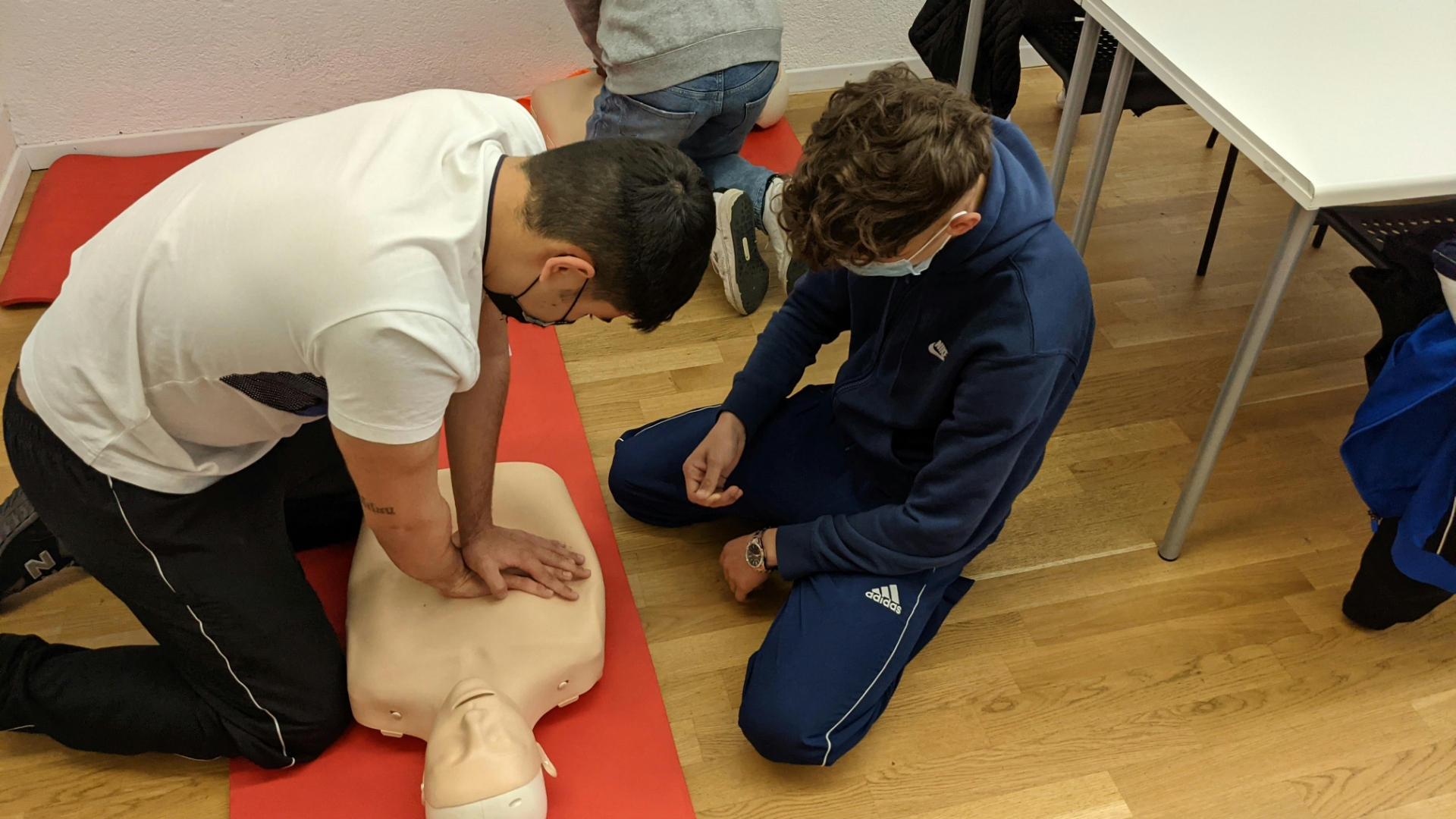
STEP 2 – PUSH: Perform CPR
Start CPR right away. Press firmly and steadily in the center of the chest. One person should call emergency services. Meanwhile, another should grab an AED to keep care going.
STEP 3 – SHOCK
The American Heart Association says that early defibrillation really increases survival rates in cardiac arrest. When an AED is available, use it right away. Follow the device’s instructions.
Using an AED on an Adult: A Step-by-Step Guide
- Turn on the AED and follow the audio instructions.
- Remove all clothing surrounding the patient’s chest (including the bra).
- Apply the included electrode pads to the person’s bare skin. Make sure the person’s chest is dry.
- Let the AED check the person’s heart rhythm. Make sure no one touches the person during this. Touching can mess up the device’s reading.
- If a shock is required, the AED will automatically assess the appropriate response. The device type determines how the shock is delivered. If it’s semi-automatic, you need to press a button. If it’s fully automatic, it delivers the shock by itself.
An automatic AED charges itself. It warns everyone to step back before giving a shock. After a short countdown, it administers the shock automatically without requiring user input.
A semi-automatic AED prepares the shock on its own but requires you to press a flashing button to deliver it. In high-pressure situations, be sure to choose the right button. Don’t confuse it with the power control.
Make sure no one is touching the person when the AED delivers a shock.
- Continue CPR as directed and allow the AED to reanalyze the heart rhythm. The device usually prompts two minutes of CPR after each analysis, as per AHA guidelines. Always follow the AED’s voice instructions for when to perform CPR or deliver another shock.
- Keep using the AED prompts until emergency medical services arrive and take charge.
Using an AED on a Child: A Step-by-Step Guide
When helping a child, check if the AED needs pediatric pads or has a built-in low-energy setting. These pads work like adult ones. They let the device check the heart and give a shock if needed.
When used on a child, the AED gives a lower shock. It usually drops from about 150 joules for adults to around 50 joules.
Some AED models have lower energy settings for children. You can activate these settings with pediatric pads or a built-in switch, key, or button on the device.
- If your AED has child pads, attach them in an emergency. Then, turn on the device and follow the voice instructions like you would for an adult.
- To use the AED for both adults and kids, press the button for pediatric mode.
For children, AED pad placement is different from that of adults. It should be adjusted to fit their smaller bodies.
The AED Protocol for Children
- Turn on the AED and follow the audio instructions.
- Remove all clothing surrounding the patient’s chest and ensure their skin is dry.
- Press the child button or insert the child key into the AED.
- Attach the pediatric pads, if available.
For children, place AED pads in a front-and-back position. Put one pad on the center of the chest and the other between the shoulder blades.
Always refer to your AED manual for exact pad placement instructions. If it’s unavailable, most pads have illustrations showing where to place them on the body.
- Allow the AED to analyze the child’s heart rhythm.
- If the AED finds cardiac arrest and suggests a shock, make sure no one is touching the person at that time.
- Continue CPR as instructed by the AED, which follows American Heart Association guidelines. The device usually asks for two minutes of compressions. Then, it checks the heart rhythm again.
- Keep following the AED instructions until emergency responders arrive. They will take over care.
As with adults, if the AED doesn’t detect a rhythm requiring a shock, continue CPR until the paramedics take over.
So, What Exactly Is an AED?
An AED checks the heart’s rhythm during cardiac arrest. It can deliver a shock to help return the heartbeat to normal when needed. It has key parts like a battery and electrode pads that sense and react to heart activity. You can find models for public use or for professional responders.
- You can find public access AEDs in airports, schools, community centers, and other public places. They’re designed for use by the general public, even by those with limited training.
- Trained responders, such as EMTs and paramedics, will use AEDs made for experts.
AEDs can be semi-automated or fully automated.
- Semi-automated defibrillators track the heart’s rhythm. If they need to deliver a shock, they prompt the user to press a button.
- Automated defibrillators check the heart’s rhythm. They give a shock if needed, all without user action.
When Should You Use an AED?
AEDs respond quickly to sudden cardiac arrest. They analyze the heart’s rhythm and deliver a shock if needed to restore it. Even with their advanced technology, they are easy to use. Almost anyone can operate them in an emergency.
AEDs are built for simplicity, offering clear guidance to users during critical moments. Understanding how they function can make a life-saving difference when time is limited.
An Adult First Aid/CPR/AED course helps you confidently manage cardiac emergencies. It teaches key skills like CPR, AED use, injury assessment, and shock management. You’ll gain the knowledge and practice to respond effectively when it matters most.
Why Learning to Use an AED Is So Important
Sudden cardiac arrest kills over 350,000 people each year in the United States. This makes it one of the top causes of death. In these emergencies, an AED is the most effective tool for restoring a normal heart rhythm.
Call for emergency help right away. Response times usually take 8 to 12 minutes. Quick access to an AED and knowing how to use it can save lives. Survival chances drop quickly with every minute of delay in defibrillation.
FAQs
What are the AED use steps in an emergency?
The AED use steps include turning on the device, attaching the pads to the chest, allowing it to analyze the heart rhythm, and following the voice prompts to deliver a shock if needed while continuing cpr.
What is the first step in using an AED on a person?
The first step with an AED is to turn it on right away. First, confirm the person is unresponsive, and then call emergency services.
How to apply an AED correctly?
To use an AED, put the electrode pads on the bare chest as shown in the diagrams. Make sure they have good contact so the device can read the heart rhythm correctly.
Are the AED step-by-step instructions easy to follow?
Yes, AED step-by-step instructions are easy to follow. They include voice and visual prompts to guide users through the process.
What AED instructions should you follow during use?
Always follow the AED instructions. Stand clear during analysis and shock delivery. Continue CPR as directed.
Can anyone learn how to use an AED?
Yes, AEDs are designed for public use. With some basic knowledge, almost anyone can use them well in an emergency.
Conclusion
In a cardiac emergency, quick action can mean the difference between life and death. Using an AED and doing CPR lets you act quickly when time is critical. These devices are easy to use and accessible. They allow anyone to jump in and assist. Knowing how to use an AED and being ready can help you act confidently. This can save a life when it really counts.