Equipping your church with an AED is a great way to protect your community. But starting the process can feel daunting. Choosing the right device involves many factors. First, you need to know the must-have features. Then, set a practical budget to guide your decision. Sudden cardiac arrest affects hundreds of thousands in the U.S. every year. Having a reliable AED nearby can make a crucial difference. This guide makes it easy for you to choose the right AED for your church. You’ll feel ready when it counts.
Survival from sudden cardiac arrest is highly dependent on speed. When help comes quickly, survival rates can hit 90 percent. But those chances drop fast with every minute that passes. Acting quickly is crucial. Even small delays can greatly lower the chances of recovery.
In a cardiac emergency during a service or with church staff, it’s crucial to stay calm and act fast. Today’s defibrillators are easy to use. They give clear voice instructions, so anyone can help, even without medical training. Choose the right device. This keeps your church ready to respond well.
Why Every Church Needs an AED
Choosing an automated external defibrillator for your church is important. The right one can significantly affect safety and effectiveness.
- Ease of use: Most churches lack medical professionals during services. So, it’s important to pick an AED that anyone can use easily. A simple device lets staff or congregation members jump in quickly. They can provide lifesaving help when it’s needed most.
- Easy pediatric capabilities: Sudden cardiac arrest often affects older adults, but children are not safe. Thousands of kids in the U.S. face this each year. It’s important to have an AED that can be adapted for kids. Young children need a lower shock level than adults.
- Multi-language capabilities: Choose an AED that has instructions in both English and Spanish if your staff speaks Spanish. This ensures clear guidance in an emergency.
- Affordability: Many churches work with tight budgets focused on ministry needs. So, it’s important to pick an affordable AED that still meets quality standards. Reliable models usually cost between $1,200 and $1,800. This price makes them a smart choice for safety.
Key Features to Consider
We looked at these key points. Then, we found several automated external defibrillators that work well in church settings.
Physio-Control LIFEPAK CR2: Simple for Anyone to Use
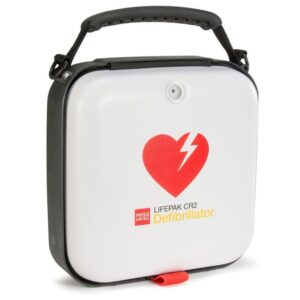
The Physio-Control LIFEPAK CR2 stands out as a dependable and cost-effective AED option, making it a practical choice for church use.
Ease of Use: Activation is easy. Open the lid to power the unit. Then, apply the pads. Clear voice prompts will guide you through each step. You can adjust the volume for louder settings. Built-in CPR guidance and a metronome help keep the right rhythm during the rescue.
Pediatric Capabilities: For pediatric emergencies, switch to Child Mode. The device adjusts settings automatically and doesn’t need separate pads.
Dual-Language Capabilities: You can switch voice instructions from English to Spanish with one button.
Price: The LIFEPAK CR2 Value Package starts at $1,940. You can also get the Value Package for $1,980. This option includes extras like a carry case, cabinet, signage, and a responder kit.
ZOLL AED Plus: Built-In CPR Guidance
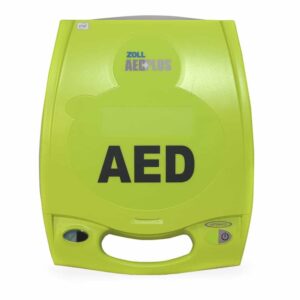
The Zoll AED Plus is designed for simplicity, making it an excellent option for users with no medical background. While it offers fewer advanced features, its straightforward operation is a major advantage in emergency situations.
Ease of Use: The Zoll AED Plus uses CPR-D-padz with clear guides for proper placement. It can also recognize shockable rhythms and delivers treatment automatically when needed. It features Real CPR Help® technology. This gives live feedback on compression depth and coaches users during the process. This innovation is unique to this device.
Pediatric Capabilities: This ZOLL unit uses Pedi Padz II electrodes. You can buy them separately for around $95. To treat a child, the standard pads must be replaced with the pediatric version.
Dual-Language Capabilities: This device doesn’t support two languages. Yet, a Spanish-only version is available for congregations that need it.
Price: The AED Plus starts at $1,699. You can also get a Value Package for $1,755. This package includes a cabinet, responder kit, signage, and decals.
Philips HeartStart FRx: Durable and Reliable
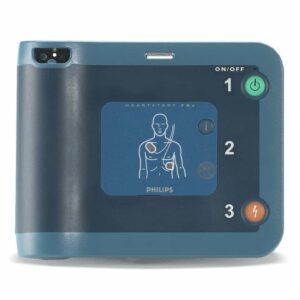
The Philips FRx is user-friendly, featuring clear voice instructions and intuitive visuals, making it especially suitable for use with children.
Ease of Use: This model offers clear guidance. It has a blue i-button that gives audible CPR coaching and Life Guidance prompts. This helps ensure proper compressions. After CPR, an on-screen diagram shows where to place the pads. Then, it prompts you to press the orange shock button.
Pediatric Capabilities: The Philips AED includes an Infant/Child Key. When you insert it, the device changes the instructions and compression settings. This is for kids who weigh under 55 pounds or are under eight years old.
Dual-language Capabilities: With HeartStart Configure software, you can choose your preferred language ahead of time. Yet, it doesn’t let you switch instantly like the LIFEPAK CR2 does.
Price: The HeartStart FRx Value Package costs $2,060. It includes a cabinet, responder kit, carry case, signage, and more. Plus, it comes with an eight-year warranty.
Defibtech Lifeline Auto: Fully Automatic Operation
A value package usually includes key accessories. If something is missing, you can easily add the items needed. This way, your AED will be complete and ready to use.
A Backpack: In big churches, finding someone fast can be tough. Plus, carrying an AED by hand can slow you down. A sturdy backpack protects the device and makes it easy to carry. This helps you respond quickly in emergencies.
A Cabinet: Put the AED cabinet in a secure and accessible location, like the church office or near other emergency gear. Some cabinets work with security systems. Choosing one made for your AED ensures a good fit and better reliability.
Signage: Clear signs, like wall posters and inspection tags, make it easy to find the AED. The tags are especially important, as explained later.
A Simple Checklist for AED Maintenance
Regular inspections are crucial for keeping an AED working well. A faulty device can endanger lives and expose the church to liability. Consistent checks help keep it reliable and ready when needed.
- Check that your AED does its routine self-tests. These usually happen daily, weekly, and monthly. Look at the display for status icons or warning lights. Any red light means there’s a problem that needs your attention right away.
- Replace the electrode pads before they expire. Keep an extra set handy to keep the AED ready at all times.
- Check the battery’s end date often. Replace it on time to ensure the AED is ready when you need it.
- Inspection tags need key details, such as the model, serial number, and end dates. They should be placed near the AED for easy visibility.
- Joining an AED management program helps track device status and end dates. It also offers medical support and ensures compliance with regulations.
Answering Your Church AED Questions
Churches don’t need to have an AED by law, but it is vital for protecting their congregations. Larger gatherings increase the risk of a cardiac emergency, so it’s important to have one.
If a church lacks an AED during a cardiac emergency, it can face major legal concerns. This is true even if the church isn’t directly at fault. Offering a defibrillator shows a strong commitment to safety. It helps protect both the congregation and the organization.
FAQs
What is the best AED for a Church?
The best AED for a church is easy to use and reliable. It should suit non-medical users. Look for devices with clear voice prompts and low maintenance needs.
Do churches need an AED?
Having an AED in a church is highly recommended, even if it’s not legally required. This can help improve response time during cardiac emergencies.
How much does an AED for a church cost?
Aed prices usually fall between $1,000 and $2,500. This range depends on the brand, features, and accessories included.
Can untrained people use an AED?
Yes, modern AEDs are made for public use. They provide voice instructions step-by-step. This means anyone can use them safely, even without training.
How often should an AED be checked?
An AED should be checked regularly. Do daily self-tests, weekly checks, and monthly inspections, plus manual reviews.
Where should an AED be placed in a church?
Store it in a visible and easy-to-reach spot, like near the main entrance or church office.
How long do AED pads and batteries last?
AED pads usually last 2–5 years, while batteries can last 2–7 years, depending on the model and usage.
Conclusion
Choosing the best AED for your church is more than a purchase, it’s a commitment to protecting lives. With the right device and care, your church can respond quickly and confidently in an emergency. Clear access is key. While no one expects a cardiac event to happen, being prepared can make all the difference. Investing in a good AED and maintaining it keeps your space safe for all.